Monday, August 18, 2014

Florida (con)Fusion Cooking

www.distinctlyflorida.com

The strong identity of any people is their cooking culture. What influences that is the environment and the spirit of their own palate. Florida has had a long history of many different peoples from the Native Americans (Timucua, Calusa, Apalachee, Creek who came to be known as Seminoles, Tequesta, etc.) to the Europeans, Asians, and Africans. Every culture has contributed a little something to our cuisine in Florida and depending on where in the state you stop, you can be treated to quite a different take on what nature has to offer. It is with this in mind that I present what I have come to think of as FLORIDA ConFUSION COOKING. It is our version of fusion cooking, just a little mixed up and hopefully in a fun way. It is a play on words because in Spanish "con" means "with" and so we are all with each other in this adventure. My first fusion meal is called the Florida Cracker Tortilla. It takes the wonderful mix of bacon, onion and collard greens and adds it to the tradition of a Spanish tortilla or omelet. These are served in Spain at any time, not just for breakfast and can be made very large and cut into sections for tapas. Below is a single serving recipe.


FLORIDA CRACKER TORTILLA

2 strips bacon
2 eggs (scrambled with a little splash of milk or cream if you like)
1 T. diced onion (or to taste--I like a lot and I use frozen for convenience)
2 T. chopped collard greens (or to taste and I use frozen for convenience)
salt & pepper to taste

Fry your bacon until very crisp. Drain & reserve most of the oil leaving some in the pan for the vegetables. Saute the onion until just starting to caramelize then add the collards and continue cooking until they soften. If you need to add a little of the bacon fat back to keep the vegetables from sticking, go ahead. Crumble your bacon evenly over the vegetables and then pour the scrambled eggs over the whole bacon/vegetable mixture. Season with salt and pepper to taste and cook until the bottom is firm. To get the top of the omelet cooked, you will either need a tortilla pan (also known as a frittata pan) or you can slide the omelet off the pan onto a plate, invert the pan over the plate so that the uncooked part of the omelet is now facing the pan and the plate is acting as a "lid" and just flip. Continue cooking and should have a perfect unbroken omelet.


Wednesday, August 6, 2014

Growing Up In Florida...A Sampler

What did it mean to grow up in Florida?

It meant that you got your orange juice, freshly squeezed, every morning in an eight ounce glass.

It meant that after school you went to the beach to study and you always kept a beach bag full of all your beach things including a portable radio.

It meant that the defroster was for when it rained to get rid of the condensation INSIDE the car windows.

It meant that the cold water tap was NEVER too cold.

It meant that bugs were a part of your life and you found ways to use them or avoid them. You chased your mother with the palmetto bugs or tossed them to waiting lizards, hunted down mole crickets in their tunnels, fed ants to doodle bugs, and learned to paint clear nail polish on chigger bites after climbing ficus trees.

You went cane pole fishing and learned that catfish will hit on anything including Lifebuoy soap.

You remember the smells of Coppertone and the ocean better than anything and when your sunburn healed you would have your sister/brother/best friend peel the skin off your back and marvel at how thin it was.

As hot as it was, we were always outside riding our bikes, climbing trees, hunting, snorkeling, water skiing, surfing, fishing, scuba diving, playing tennis, racket ball, skating, volley ball, hand ball, water polo, synchronized swimming, canoeing, hiking, golfing, riding horses, or just plain swimming, swimming, swimming because water is everywhere. It should be against the law in Florida to not know how to swim.

It seemed like everyone had a Florida room with jalousie windows that were impossible to keep clean or fully closed and the crank ALWAYS broke.

If you stuck a stick in the ground, it grew or got moldy. If you left something metal out, it got rusty and in a week it was covered in vines. Good luck finding it.

It always rained at three o’clock to cool things off and made the walk home from school a puddle hopping adventure.

Sinkholes are a fact of life, just like ‘gators, sharks, Portuguese man o’ war, sea lice, chiggers, water moccasins, brown recluse spiders, and I-95.

Lizards were earrings and we were always sucking on the base of some flower or chewing on some plant. It's a wonder we didn't die.

It meant that thunderstorms and tropical depressions held no special meaning but you prepared for hurricanes a couple of days ahead and filled the bathtub with water and collected all your supplies.

It meant that you could eat fried catfish and hush puppies one night and Ropa Vieja with black beans and rice the next and think nothing of it.

It meant the people around you were always changing but you never met a stranger because this was the land of sunshine and whomever you met received your smile.


Welcome to Florida.

Wednesday, November 13, 2013

Cocoplum Nut Butter? (Yes, I know it's a seed.)


In my ongoing quest to be the George Washington Carver of cocoplums, I decided I'd make cocoplum nut butter. Of course, I wanted it to be healthful so I used what I thought were healthful ingredients: light olive oil, light salt, honey and my fresh picked and hulled cocoplum seeds. Hulling the seeds is the most time consuming and tedious part of this recipe so I would suggest you do it while watching something entertaining like FLORIDA CRACKERS. (Ha, ha. Get it? Crackers. Cracking the hulls... Then you spread the nut butter on crackers and... Oh... Never mind.)


I treated the cocoplum seeds exactly as though they were peanuts and used a recipe for peanut butter: 

15 oz. of nuts
1 teaspoon salt
1 1/2 teaspoons honey
1 1/2 teaspoons olive oil
(my second batch was made with regular sugar and coconut oil and tasted better)


Blend until it reaches the consistency you prefer. Taste and adjust to your liking. This has a very distinctive, strong flavor and I liked it. I am certain, however, that this will prove to be the kind of nut butter that people either like or hate. My second batch was made with coconut oil and tasted better, but I wanted to share the process of my experiment with you. You could try other oils; try it without sugar; try it with added spices. I'm imagining something along the lines of tahini sauce (made from sesame seeds). I'm not a chef but I hope someone out there who wants to make a name for him /her self starts to experiment with this. Come on. Let's get the ball rolling.


The cocoplum nut butter is really good on crackers and would make unusual and savory hors d'oeuvres.


A sophisticated, grown-up Florida version of peanut butter and jelly, this cocoplum nut butter and cocoplum jam is the ultimate in taste and distinction. Wow.


Using the nut butter the way I would peanut butter, I made these cocoplum nut butter thumbprint cookies. The recipe will be in an upcoming post.

Sunday, November 10, 2013

Wherefore Art Thou, Floride?


Florida has a strong auto racing history.  Daytona, Sebring, Homestead-Miami, St. Petersburg-Tampa Bay all hold major racing events. In fact, Florida is host to more top-level racing than any state in the nation. Automakers pay homage by naming cars for Daytona and for Sebring. It should not be surprising to discover cars named for our state. Still, considering our history, you might wonder why there aren’t more. The following story could have part of the answer.

In 1959, a car named for Florida was introduced but most Americans would not know it by that name.  It was the Renault Floride, a sport model built on the Dauphine platform, designed expressly for the American market and immediately popular here.  But, as Sports Car Graphic reported in October 1959, the name was quickly changed.
“Dealer reaction to the car was wholly favorable except for one contingent from California that asked, ‘Why Floride? That’s only one state among [at that time] 48. We like the car but does it have to have that name?’
“Renault officials looked upon this as a serious matter. ‘After all, California took a large percentage of Dauphines and if sales were to suffer due to statehood pride we had better have some discussions about it.’ They did, and during the last course of dinner on the Bateau Mouche, as it made its way down the Seine River, asked for a show of hands to three different names that had been nominated. A resounding cheer went up for the name, ‘Caravelle,’ and although no promises were made the California group went home fairly secure in the thought the Floride would have a new name.
“Now the car is ready for the public – and with the new name for the United States market. In France, it will still be known as the Floride.”
The Floride / Caravelle became the flagship of the Renault line and remained in production through 1967.

Did Florida racing start with something more exotic? :-)


Wednesday, November 7, 2012

Lizard, My Lizard

Anolis carolinensis
www.distinctlyflorida.com

Lizards! They are just so cool with their push-ups and throat fans and pugnacious attitude. Leaping lizards, battling lizards, lazy lies a lizard soaking up the sunshine. 

Did you play with them as a child? I did. I let them bite my earlobes and they dangled like living jewels. I turned them on their backs and "sang them to sleep". As an adult, I tossed palmetto bugs to them while gardening. I occasionally stumbled across them at their most intimate moments, then felt compelled to apologize and turn away. Even a lizard deserves a little privacy.

I'm not a lizard snob. I like the brown anole even though it is not native to Florida; and the curly tailed lizards are adorable and so brazen. But the green anole will always be first in my heart. His motions are smooth and slow and his green is so happy and bright. In moments of distress, he turns the brown of old leaves, his rib cage fans in and out with his heightened agitation and he will stiffen and extend his throat fan in defiance. 

Lizards are champion climbers. Their acrobatic leaps are worthy of Cirque du Soliel. I once saw a lizard leap through the air, nab a dragonfly and land a little precariously on an adjacent shrub. How did he manage to eat that whole thing? Amazing.

They don't always make the best choices and I remember one morning, on my drive to work, I was startled to see a lizard holding on for dear life to the wiper blade of my car; the wind buffeted him and he closed his eyes as though he was thinking, "Oh, good Lord, save me from this nightmare." I couldn't stop. I was on the expressway and I had a class to teach. He crawled out of my view and I don't know if he found shelter or was swept away to his death. This shook me up so badly that I called my husband, distraught and nearly in tears. Silly, I know, but my husband understands me and later when I went out to my car to drive home, I found he'd left me a note... Ode to a Lizard... written on the back of his business card and clamped under the same wiper blade.

The young ones will sometimes sneak into my house and I will later find their desiccated bodies and try not to think of how they'd suffered. I stopped spraying completely. I can live with a few bugs and I let the lizards take care of them. I feel as though I'm blurring the line between indoors and outside but this seems a very Florida thing to do. If a guest sees a palmetto bug, I break out the fly swatter. I'm not as fast as a lizard, but I get the job done.  

For all their charm and antics, I have chosen to honor the lizard with some Distinctly Florida products and to share some stories. I hope you will join me in expressing your love for lizards.

Green Anole Pottery 


Tuesday, September 11, 2012

Pudding, You Say? Cocoplummy Yummy!

http://www.distinctlyflorida.com/

Cocoplum Pudding


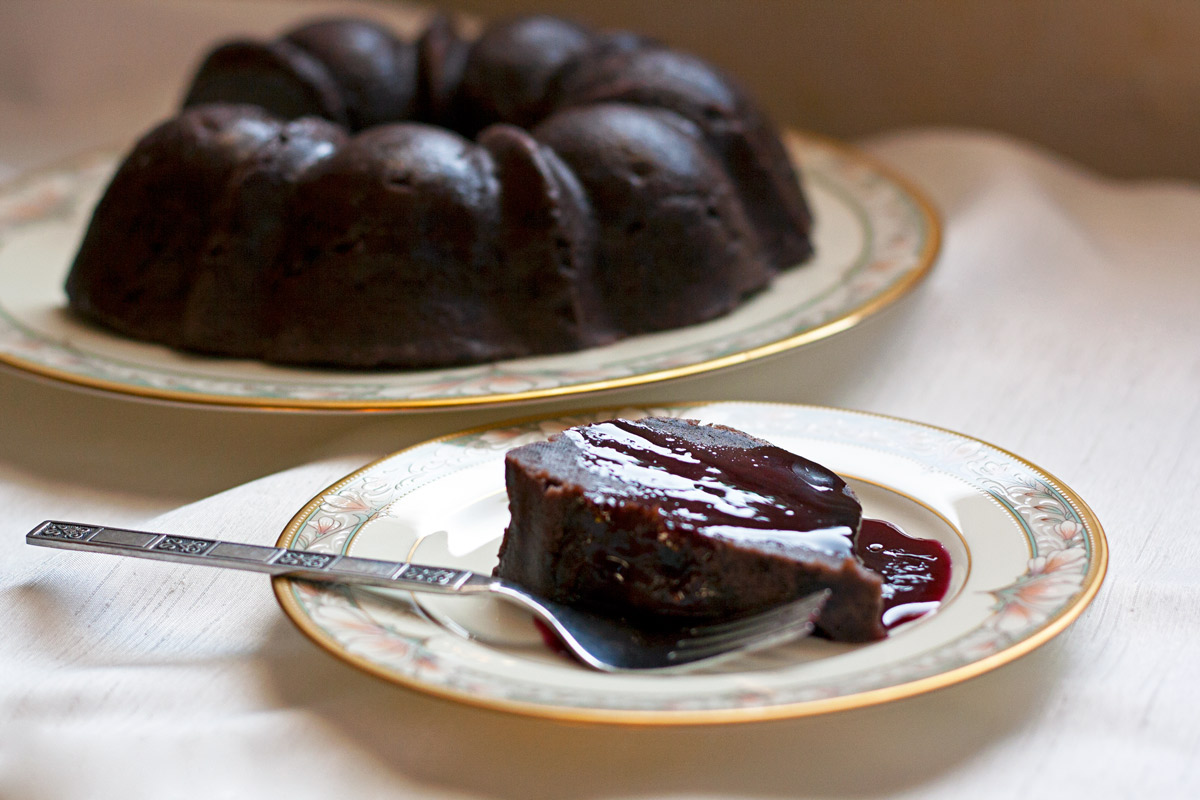
  As experiments go, I'm going to rate this one a success. I've never made a steamed pudding before and I had to improvise the recipe because there are none specifically for cocoplums. I pulled out my mother's old WOMAN'S HOME COMPANION COOK BOOK and used the recipe for steamed cherry pudding with some modifications. The resulting pudding was dense, moist and mildly berry flavored. I melted some of my cocoplum jelly as a sauce and the contrast was wonderful. This pudding is not too sweet and will remind you of a bread pudding. Feel free to tinker with the recipe, as this was a first attempt and there are many variations to pump up the impact. You could change the spices, add almonds or the cocoplum seeds (I would recommend removing the fibrous skins), add raisins or coconut, use a nice liqueur in your sauce... Be creative! And please feel free to share any variations you create. I am only offering a starting point.

 Here is the recipe:

2 cups cooked cocoplum pulp 
2 cups flour
1/2 teaspoon salt
3 teaspoons baking powder
1/8 teaspoon cloves
1/2 teaspoon cinnamon
1/3 cup butter
2/3 cup sugar
1 egg
1/2 teaspoon vanilla
3/4 cup milk


  Cream the butter; add the sugar gradually and cream together. Add egg and vanilla until blended. Mix in salt, baking powder, cinnamon and cloves. Once these are well blended, stir in the cocoplum pulp. Lastly, add the flour and milk, alternating a bit at a time and stirring only enough to blend thoroughly. 
  Pour the batter into a greased and sugared 2 quart mold and cover with a cloth tied securely. (This is done to protect the batter from dripping steam.)
  You can use individual molds if you like and these will take less time to steam--30 minutes or so.
  The large mold will take about 2.5 hours if you steam it in a large covered pot with about 1" of water in the bottom and a rack to put the mold on, or you can use a pressure cooker and reduce the time to about 80 minutes. I used the pot because my mold was too big for my pressure cooker.
  Once the pudding is done, remove it from the steamer and allow to set for a few minutes before you un-mold it. I removed the cloth and put a plate over the mold and just flipped it over. (The pudding did not come free immediately so I just left it and went to play spider solitaire.) When I came back, it had fallen onto the plate and was perfect! How often does that happen? I was delighted.

  To make the sauce, mix 1/2 cup sugar with one tablespoon cornstarch in a saucepan. Stir in 1 cup cocoplum juice and bring to a boil. Boil until thickened. If you like it a little tart you can stir in one tablespoon of lemon juice. This sauce can be used over pancakes, too.

  Cocoplum pulp: Wash about 200 cocoplums and put them in a pot with enough water to cover and two cinnamon sticks. Bring to a boil. Reduce heat to simmer for about and hour or longer, until the plums are soft. Allow the plums to cool and then squeeze to remove the pits. (Set the pits aside to be later shelled and eaten or made into  brittle or butter.)
  Drain the pulp of liquid through a cheese cloth by squeezing GENTLY. Do not squeeze out all the juice. 


  The juice can be used to make jelly, sauce or hard candy (future posts). 

Bon Appetit!


Monday, August 20, 2012

The Native Gourmet Treat in Your Front Yard

www.distinctlyflorida.com/
Native Gourmet

Gracing parking lots and suburban yards is a gourmet delight so secret that you’ll swear it’s a conspiracy. Birds and squirrels know this hidden treasure but they’ll never tell. One online reference on how to tap into the succulent treat comes from a relatively unknown cay in Belize. Few Floridians have ever tasted its subtle sweetness and many don’t even know it can be eaten. This native south Florida shrub requires no special care, will flower on and off throughout the year and if left to grow into a small tree it will reward you with bountiful fruits. You can even crack open the six-segment central shell to get at the tasty nut (really a seed). Many will tell you the fruit will make a delicious jelly or jam, but try to find someone who has actually done it. What is this mysterious plant? The surprising answer is Chrysobalanus icaco, also known as cocoplum.


The fresh fruit can range from the size of a ping pong ball to as small as an olive and has a slightly sweet, mild flavor. The interior nut is pistachio-sized and is sometimes described as tasting like an almond, coconut, or peanut. The real magic happens when you cook the fruit with a little water and some cinnamon sticks. (The flavor resembles a really rich, deep grape with a berry finish.) The resulting juice can then be turned into dessert sauce, jam, jelly, candy, liqueur, brittle or even ice cream.

To make the jam, you will need at least 200 cocoplums. You can find them in city parks, along roadsides, in parking lots - any place the plants haven't been pruned too severely. The only caveat is to pick places where you are sure no pesticides have been used. (I usually go by the presence of insect life.) They are common in the wild and if you are out that way and not on a state preserve or national wildlife refuge, you can collect them there, too.


Wash the plums well and place in a pot with enough water to cover and two cinnamon sticks. Bring to a boil and simmer for about 1.5 hours. You may need to add water, so check on it every now and then. Soon your kitchen with fill with a heavenly aroma - your first hint at the delicacy to come.


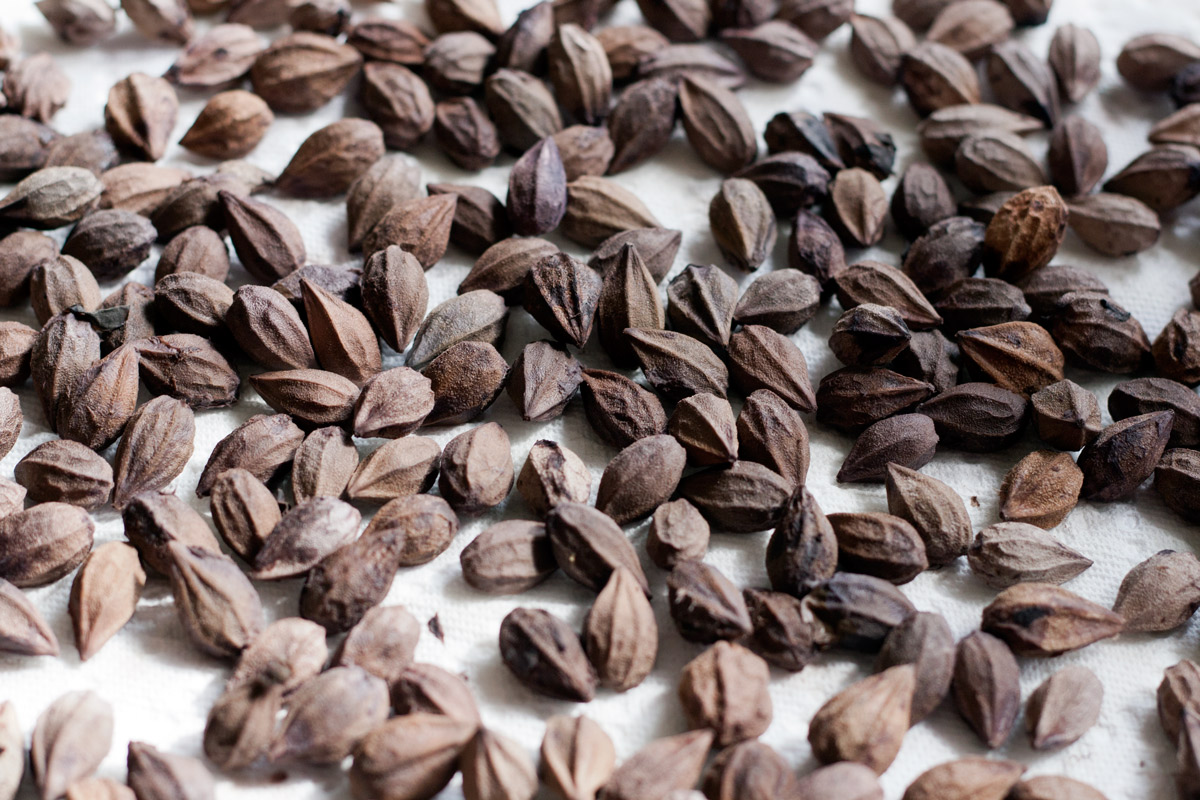
Once the liquid is a dark purple and the fruits are soft, remove the pot from the heat and allow to cool. You will be separating the meager pulp from the nut for the next stage. I imagine there are machines that can separate the pulp from the pit, but I don't own one so I put on some clean gloves and squeezed the nuts free. This took a little while. The nuts are tasty on their own so I put them aside to dry.


As you can see, the nut is in a segmented shell. This opens easily by pinching along the seams. The shell is in six segments, which I found fascinating. They are about the size of pistachios. Here is what the nut meat looks like:


I tried roasting the nuts but I like them better not roasted.

The yield was about two cups of pulp. I used the recipe for quick & easy freezer jam and followed the directions described for strawberries since cocoplums are not a well-known fruit. I stirred in one cup brown sugar and 3 cups white (mostly because I ran out of brown sugar). Stir the sugar into the fruit pulp and let sit for 10 minutes, stirring occasionally. While that is blending, add one box of pectin (1.75 oz) and 3/4 cup of water in a small pot and bring to a boil, stirring constantly. Boil for one minute. My pot wanted to boil over so I had to stir pretty fast and really reduce the heat. Once this is done, add the pectin liquid to the pulp/sugar mixture and stir until most of the crystals are melted. I heated the mixture a little but I'm not sure that was necessary. It should take about 3 minutes or so until it is smooth and not grainy. Pour the jam into clean, sterile containers and leave about a 1/2 inch gap at the top for expansion if you plan to freeze it. Cap them. (These are screw on lids.)


 Let it sit out for 24 hours and then refrigerate or freeze. It will keep in the refrigerator for about 3 weeks and in the freezer for about a year. I gave a lot of mine away to neighbors because I want to promote this yummy treat. You can use this jam in so many ways. Use it over meats, on desserts (it is great over key lime pie), on brie or goat cheese. Use it in vinaigrettes. Chop the nuts and stir them into the jam for a yummy conserve. Let your imagination soar. This is a dooryard fruit that needs to be explored.


Bon Appetit!

Other ideas: